1. What are the visa and permits needed for Kailash tour from Kathmandu?
Visitors from countries enjoying China’s visa-free policies can travel to Mount Kailash from Kathmandu without a visa, as long as your travel duration is within the time frame. If your entire trip length exceeds the visa-free period, You need to get a Chinese Group Visa for those entering Tibet from Nepal. It can be applied at the Chinese Embassy in Kathmandu and our guide will help you submit your application form and take you to record your fingerprint. It typically takes four working days to obtain your Chinese Group Visa. Additionally, Kathmandu to Kailash tour requires additional permits, including the Tibet Travel Permit, Aliens' Travel Permit, and Military Area Entry Permit. Once you book with us, we will help you apply for these necessary permits.
2. How to reach Kailash Parvat from Nepal?
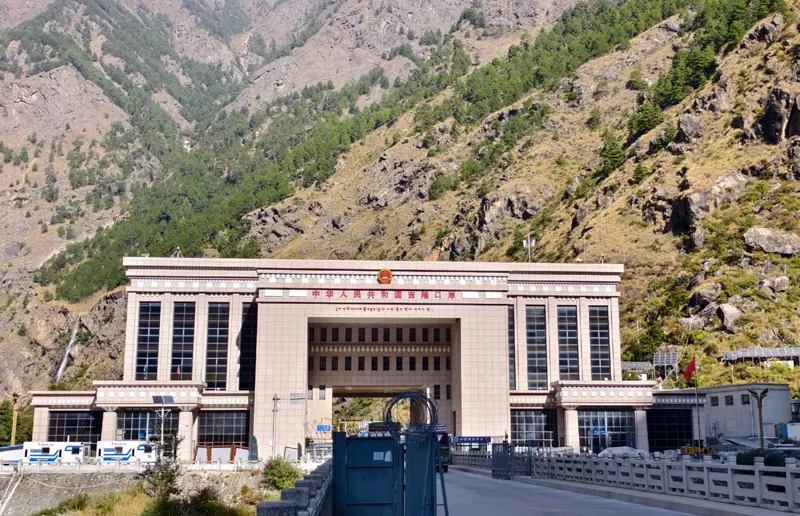
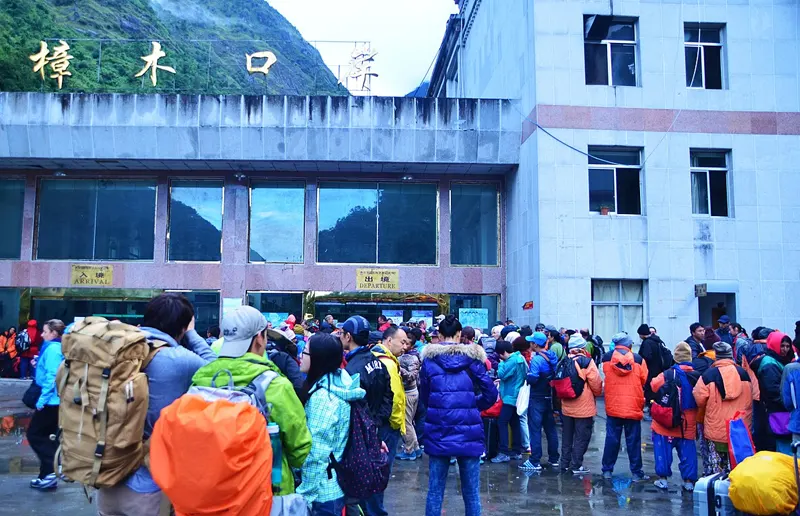
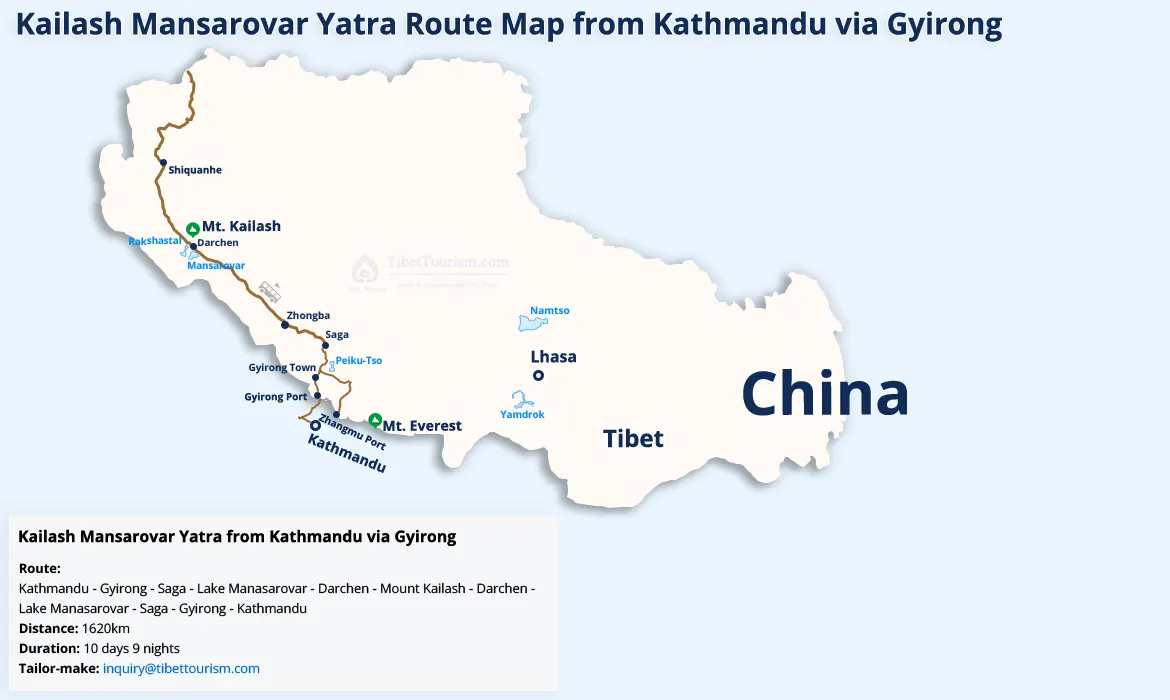
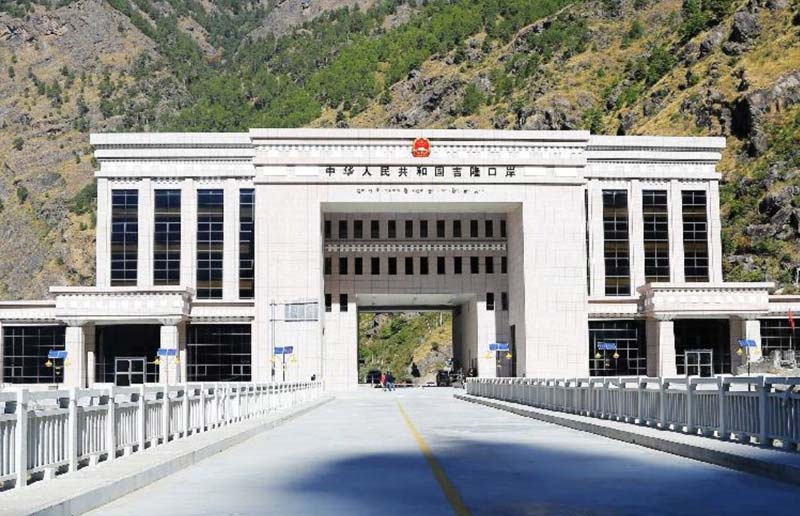
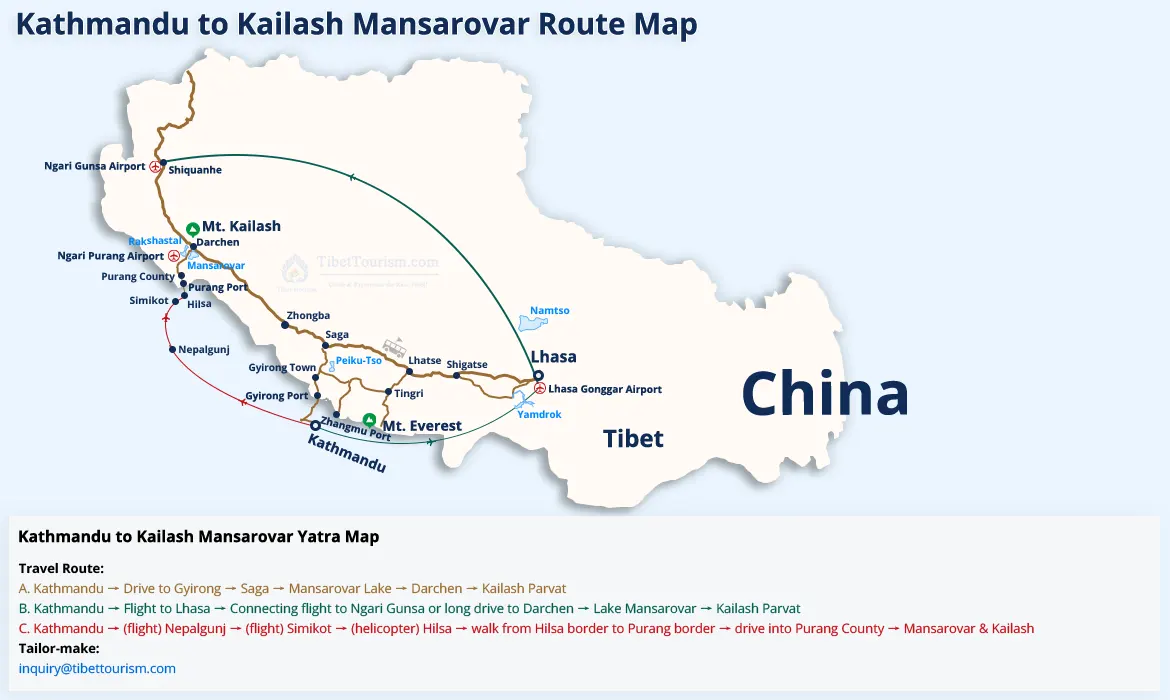
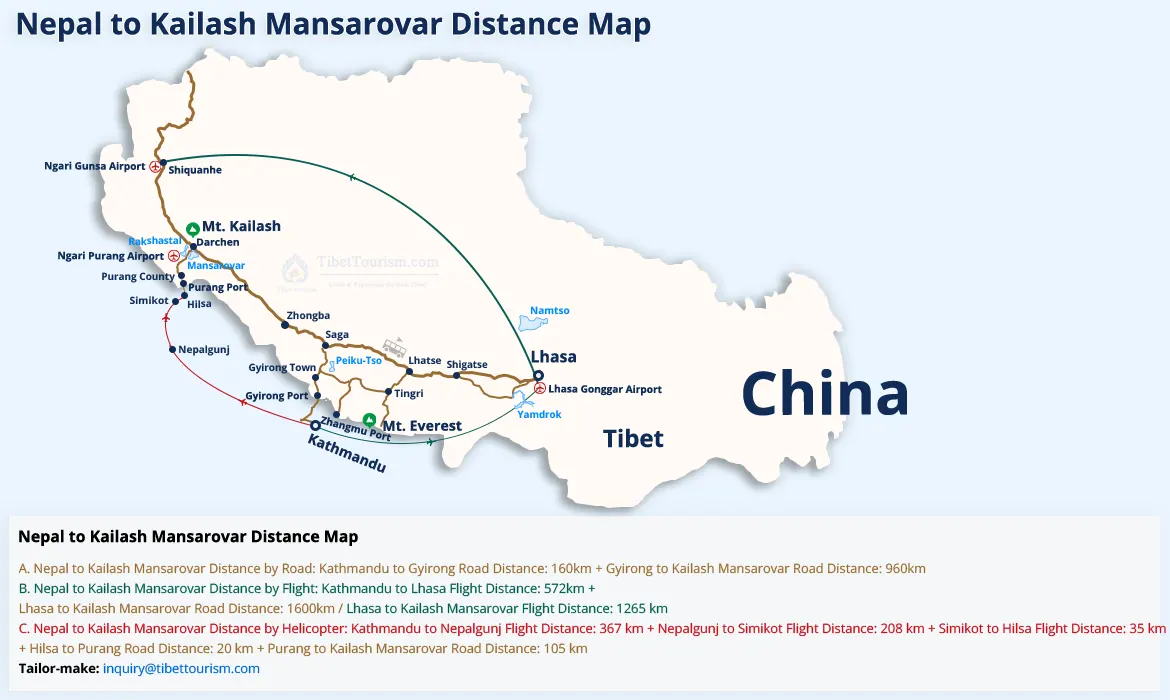
There are primarily three approaches to get to Mount Kailash from Nepal. You can opt for an overland route from Kathmandu to Mount Kailash via the Gyirong Port. This option offers a straightforward access to Kailash Manasarovar region and provide opportunities to explore the diverse landscapes and cultural heritage along the way.
Alternatively, you can take direct flights from Kathmandu to Lhasa, the capital of Tibet. Upon arrival in Lhasa, travelers can embark on an overland journey to Mount Kailash. This route allows visitors to acclimatize gradually to the high altitude while enjoying the landscapes of Tibet.
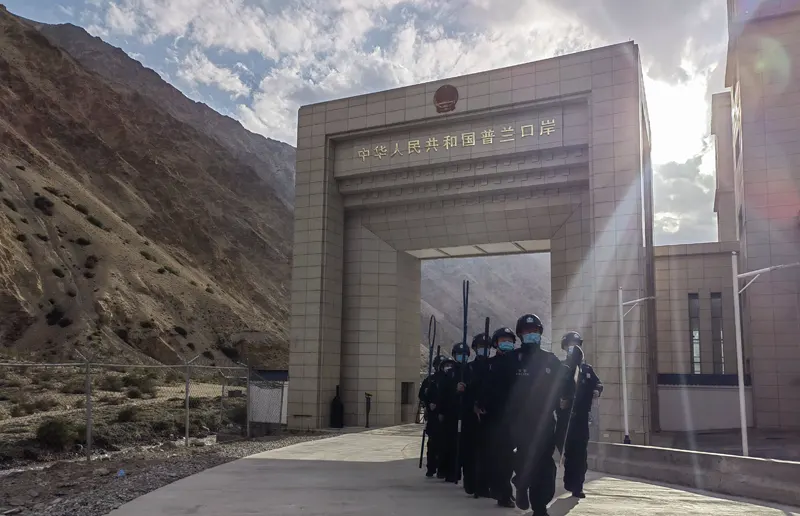
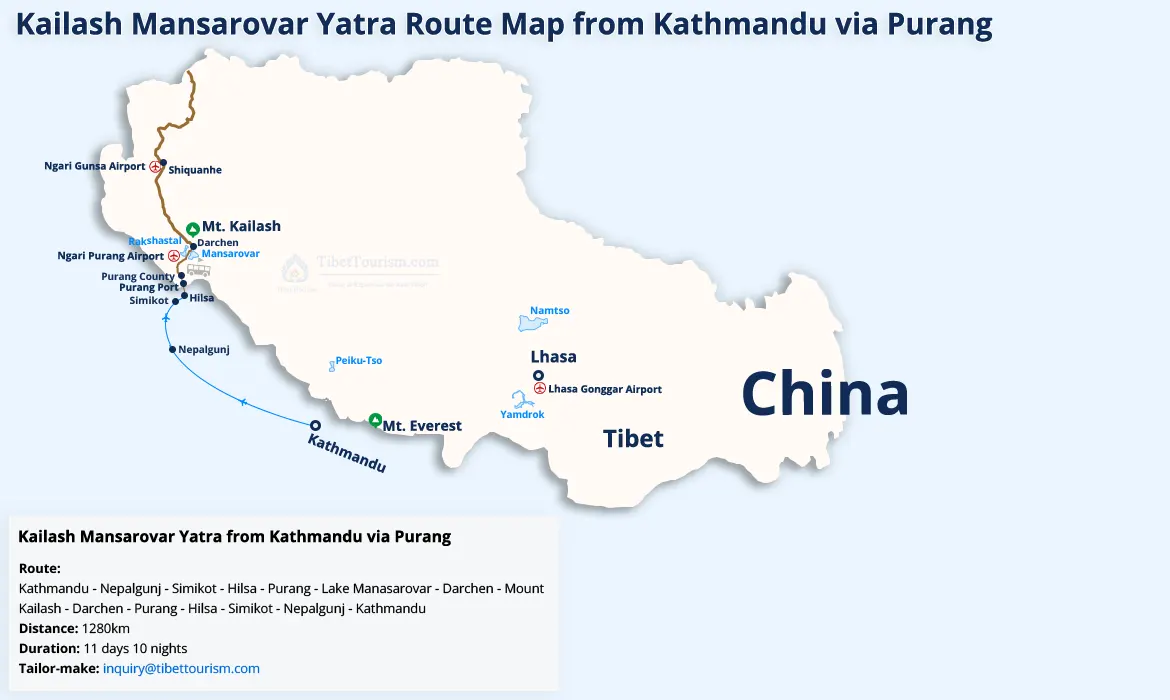
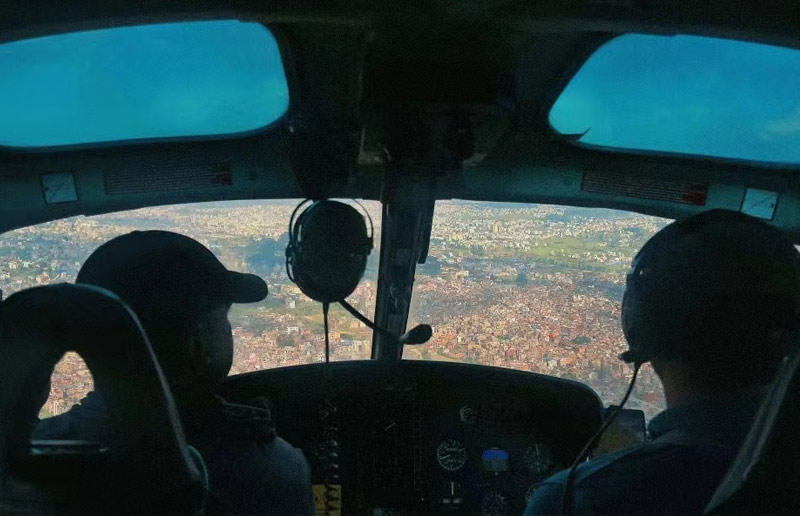
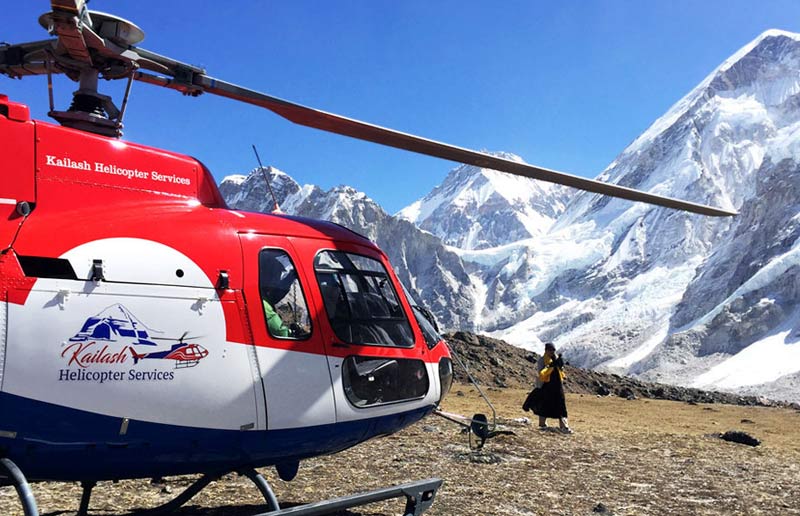
If you prefer a unique and exciting experience, you can travel from Kathmandu to Mount Kailash by helicopter. You can take a flight to Nepalgunj and then to Simikot, where you can enjoy a helicopter ride to Hilsa, a small village near the Purang Port. You can enter Tibet via Purang Border, which is close to Mount Kailash.
3. What is the best time to visit Mount Kailash from Kathmandu?
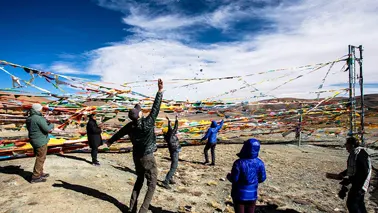
The optimal time to take a Kathmandu to Kailash tour is from April to October. During this time, the weather is generally stable, with comfortable temperatures and less chance of rain. This makes it perfect for trekking around the mountain. For an enriched cultural and spiritual experience, consider timing your visit with the Saga Dawa Festival, which falls on the 15th day of the 4th month in the Tibetan calendar. Moreover, finishing a Kailash Manasarovar Yatra during the full moon period is believed to enhance the spiritual merits. During these, pilgrims gather there, holding religious ceremonies and rituals, infusing deeper spiritual touch to your Kailash tour.
4. Does Kathmandu to Kailash tour have an age restriction?
No. Any person, from kids of only several months to seniors over 70, can take the Kathmandu to Kailash trip. Nevertheless, Kailash tour usually includes a 3-day Kailash Yatra, encompassing 43km. It can be challenging for small kids and senior people. Therefore, it’s suggested that you consider your physical condition before joining a Kailash tour package from Nepal.
5. Where to stay during the Kailash Yatra tour from Kathmandu?
In Darchen, the base of Kailash Yatra, you can find diverse accommodations from upscale hotels to economic guesthouses. Along the Kailash Yatra route, however, there are no luxurious hotels but guestrooms in monasteries. During your trek, the first night you’ll stay at Dirapuk Monastery guesthouse and the second night at Dzultripuk Monastery guesthouse. These guestrooms provide basic facilities, ensuring you a comfortable rest. If your Nepal to Kailash Tibet tour covers other destinations like Zanda, Lhasa, Shigatse, your accommodation options vary depending on the infrastructure of the specific site.
6. What to eat along the Kailash Yatra tour from Kathmandu?
During your trip, you’ll encounter local Tibetan specialties like tsampa, stone pot chicken, and yak meat. You can also find Nepalese dishes, Sichuan cuisine and basic Western-style food. Once you begin the trek around Mount Kailash, you may only find teahouses at monasteries and supply points offering basic fare such as Tibetan noodles and butter tea. To keep your energy up, consider packing bread, instant noodles, snacks, and fresh fruit. Alternatively, you can hire a personal chef to prepare hot meals along the way.
7. How about the road condition of Kathmandu to Kailash tour?
The road condition connecting Kathmandu with Kailash Manasarovar area are generally good. With the improvement of infrastructure, the roads in the remote western Tibet are mostly now well-paved, except some country roads leading to the mountain and lakes. At Tibet Horizon, we provide well-maintained vehicles and experienced drivers, ensuring you a safe overland trip.
8. How to acclimatize to the altitude of Mount Kailash from Kathmandu?
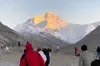
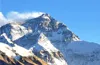
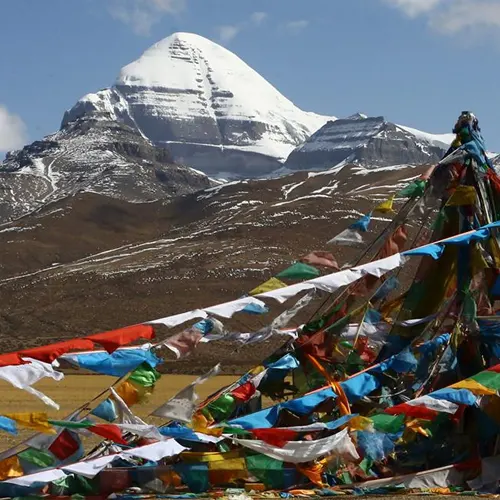
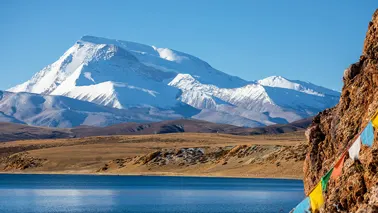
Mount Kailash has an altitude of around 6638 meters and the average elevation of the Kailash Yatra of over 4500 meters. Traveling from Kathmandu to Mount Kailash, the altitude change is above 3000 meters. Therefore, it’s necessary to adapt to the environment gradually. It’s suggested to take a slow pace in the initial two days after entering Tibet Plateau in Gyirong, Darchen, Purang or Lhasa. Eat balanced meals, drink enough waters, and avoid strenuous activities. You can also prepare some medications for altitude sickness..
9. Can I use Rupees for payments during the trip from Kathmandu to Mount Kailash?
The official currency in Tibet is the Chinese Yuan (CNY). Therefore, it is recommended that you exchange for some cash in advance. You can exchange money at currency exchange counters at the borders or the airport. In Tibet, many shops, hotels, and restaurants also accept mobile payments and credit cards. However, in more remote areas like Mount Kailash, it is advisable to use cash for transactions.

 inquiry@tibettourism.com